Forget the Algorithm: Why Forum Communities Keep Members Coming Back for Years
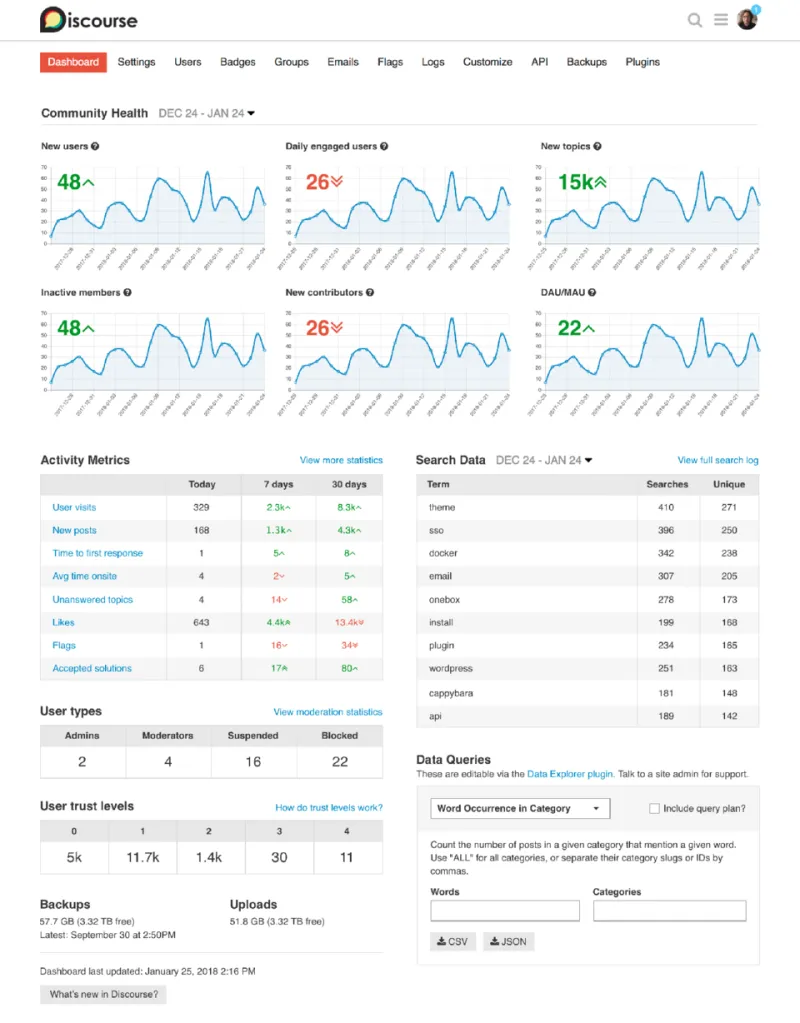
Photo: SilversmithJo, CC BY-SA 4.0, via Wikimedia Commons
Here's a stat that should make every social media marketer sweat: a well-run forum community can retain active members for years — sometimes decades — while the average TikTok or Instagram user churns through platforms like they're trying free trials. The numbers aren't even close. So why does everyone keep chasing algorithmic platforms when the evidence for forum-style communities is this strong?
Short answer: because likes are easy to measure and belonging is hard to quantify. But that doesn't mean belonging isn't real, or that it isn't the single most powerful driver of long-term engagement on the internet.
The Attention Economy vs. The Community Economy
Most social platforms are optimized for one thing: keeping your eyeballs on the screen for as long as possible so ads can be served to them. The algorithm doesn't care whether you feel good about the time you spent — it just cares that you spent it. That's the attention economy, and it's brutally effective at capturing short bursts of engagement.
Forum communities operate on a fundamentally different model. They're not optimized for passive consumption — they're structured around participation. You don't scroll a forum. You read a thread, form an opinion, and then you post it. That active involvement creates a completely different psychological relationship between the user and the platform.
Research in social psychology consistently shows that active contribution to a group increases both perceived belonging and commitment to that group. In plain English: when you've put effort into something, you care about it more. Forums extract that effort by design. Social media largely doesn't.
What the Retention Numbers Actually Show
Community managers who've built and maintained forums over long periods consistently report retention patterns that would make a social media growth team's jaw drop. It's not uncommon for established gaming forums, hobbyist communities, or niche interest boards to have members with five, eight, even fifteen years of continuous participation.
One community manager who runs a long-running PC gaming forum with roots going back to the early 2010s described their retention this way: "Our 90-day retention rate for members who post at least once in their first week is around 60%. For members who post in their first three days, it's even higher. Once someone contributes, they stick around."
Compare that to social platforms, where monthly active user churn can hit 30-40% annually even for the biggest names. The difference isn't the content — it's the structure. Forum threads are persistent. Your post from three years ago is still there, still searchable, still being discovered by new members. That creates a sense of legacy that no social feed can replicate.
The Psychology of the Username
There's something specific to forum culture that rarely gets enough credit: the weight of a username. On most forums, your username is your identity. It accumulates reputation, post count, community standing, and history. Other members recognize it. New members see it and associate it with expertise or personality.
That's meaningfully different from a social profile. On Instagram or X, your follower count is the primary signal. On a forum, your post history is you. That shift in identity architecture changes how people behave and how invested they become in the community.
Gaming forums are a particularly strong example of this. Communities built around specific games — especially longer-lived titles like MMOs, competitive shooters, or strategy games — often develop rich internal hierarchies of respected contributors. Getting recognized by name in a thread by someone you've admired for years? That's a legitimately meaningful social experience, and it keeps people coming back in ways that follower counts simply don't.
Meaningful Discussion vs. Engagement Bait
One of the clearest differences between forum engagement and social media engagement is the depth of the interaction. Social platforms are structurally biased toward short, reactive content — hot takes, memes, quick reactions. That content generates clicks and shares, but it rarely generates the kind of thoughtful exchange that builds lasting community bonds.
Forums, by contrast, reward longer, more substantive posts. A well-argued thread reply can become a reference point that gets quoted for years. Deep-dive posts become community resources. The format itself incentivizes quality over volume.
A community manager who oversees a large tabletop gaming discussion board made this point bluntly: "We have threads from 2017 that still get new replies. Members reference old discussions, build on them, update them. That's institutional knowledge. You can't build that on Twitter. It evaporates."
That institutional knowledge is also a massive retention driver. When a community has years of accumulated discussion, guides, debates, and shared history, it becomes genuinely difficult to leave. Where else would you find that context? You can't just recreate it on a subreddit or a Discord server.
Why Discord Isn't the Answer
A lot of communities have tried to solve their engagement problems by migrating to Discord — and many have regretted it. Discord is excellent for real-time chat and voice communication, but it's terrible for archival discussion. Messages scroll into oblivion. Search is weak. New members can't meaningfully access the community's history.
Several gaming communities that made full migrations to Discord have reported the same outcome: initial activity spikes followed by a slow erosion of deep engagement. Without threaded discussion and persistent archives, communities flatten out. Everyone ends up talking in circles because nobody can easily reference what was said six months ago.
The forums that have thrived are the ones that recognized Discord as a complement to forum discussion — not a replacement. Real-time chat for quick coordination, forum threads for anything worth preserving.
Building Something That Lasts
If you're running or thinking about starting an online community, the data and the psychology point in the same direction. Algorithmic platforms will rent you an audience. A well-run forum can give you a community — one that sticks around, builds something real together, and keeps showing up not because an algorithm fed them content, but because they genuinely want to be there.
That's not a small thing. In an internet increasingly dominated by passive consumption and disposable content, a community where people actually know each other and care about what they're building together is genuinely rare. And rare things, as any forum veteran will tell you, are worth protecting.