Ghost Forums: Why the Internet's Abandoned Discussion Boards Are More Alive Than You Think
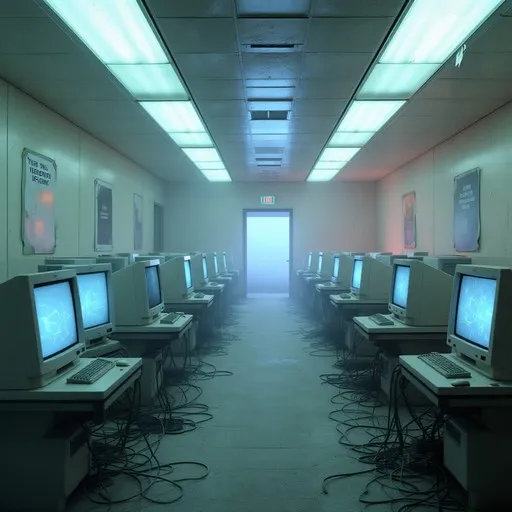
Photo: old abandoned computer screen glowing in dark room nostalgic internet, via images.stockcake.com
Picture this: you're troubleshooting a weird bug in a game you've been playing since 2009. You Google the error message, scroll past a few useless Reddit threads, and land on a forum post from 2011. The site looks like it was designed by someone who really loved gradient backgrounds and Comic Sans. The last reply was posted during the Obama administration. But buried in that thread, post number seven from a user named xXDarkSlayer47Xx, is exactly the fix you needed.
The forum is dead. The fix works perfectly.
This is the strange, stubborn afterlife of the internet's abandoned discussion boards — and it's a bigger deal than most people realize.
The Graveyard That Never Stops Giving
There are millions of dormant forums scattered across the web. Some were shut down gracefully, with admins posting a farewell thread before turning off the lights. Others just... stopped. The owner let the domain lapse, the hosting bill went unpaid, or everyone simply drifted to Discord and Reddit without ever formally saying goodbye. The threads froze in place like digital amber.
What's fascinating is what happens next. These forums don't disappear from the internet's memory. Search engines keep indexing them. Wayback Machine snapshots preserve them. And people — real people with real questions — keep finding them, reading them, and getting value from them years or even decades after the last post.
For gaming communities in particular, this phenomenon is huge. Old GameFAQs-era boards, early Minecraft fan forums, World of Warcraft guild sites from 2006 — they're all out there, still ranking on Google, still answering questions that newer platforms haven't bothered to address. A detailed strategy guide posted on a defunct forum in 2008 can outperform a shiny YouTube video published last month, purely on the strength of its specificity and its years of accumulated search authority.
Why We Don't Delete Them (And Probably Shouldn't)
Here's a question worth sitting with: why aren't these forums getting deleted?
Sometimes the answer is practical — nobody's actively maintaining the server, so nobody's actively taking it down either. But sometimes it's more intentional. Forum owners who let their communities go quiet often make a deliberate choice to leave the archive up, because they understand that the conversations their members had still have value.
That instinct is correct, and it goes deeper than just SEO traffic.
Old forums are primary sources. When internet historians, journalists, or researchers want to understand how a subculture talked about something in 2007, those archived threads are irreplaceable. The early speedrunning community's discussions about what counts as a legitimate run. The first fan theories about a game's lore before the developers confirmed anything. The way a specific hobby's vocabulary evolved over ten years. You can't reconstruct that from Reddit, which has its own memory problems. You need the original boards.
For gaming culture specifically, this archival function is enormous. The history of competitive gaming, modding communities, and indie game fandom is scattered across hundreds of these ghost forums. Lose them, and you lose a chunk of the actual record.
The Nostalgia Factor Is Real
There's also something emotionally significant happening when people revisit these spaces.
For a lot of Americans who grew up online in the late '90s and 2000s, forums were formative. They were where you figured out who you were, found your people, had your first real debates, and spent entire summers talking about stuff you couldn't discuss anywhere else in your life. Stumbling back onto one of those old boards — even one that's been dead for a decade — hits different.
There's a whole genre of Reddit thread that goes something like: "I found my old forum account from 2004 and reading my posts is sending me." The comments are always full of people sharing their own versions of the same experience. The emotional resonance is genuine.
This nostalgia isn't just personal, either. It points to something important about how online communities function as cultural touchstones — places that shaped how entire generations of people communicate, argue, and form identity. A dead forum is still a monument to that, even if nobody's actively tending it.
The Dark Side of Digital Graveyards
It's not all heartwarming, though. Ghost forums come with real complications.
Misinformation is one of the biggest. A forum post from 2010 with outdated medical advice, incorrect technical information, or bad financial guidance can still rank well on Google because of its age and backlink history. The original community that might have corrected it is long gone. Nobody's updating the thread. That's a genuine problem, and it's one the internet hasn't figured out how to solve cleanly.
Privacy is another issue. People posted on those old forums with the assumption that they were talking to a small community of like-minded people. They didn't necessarily sign up for their teenage opinions to be permanently indexed and searchable by their future employers, family members, or anyone else with a Google account. The ethics of preserving those archives get complicated fast.
And then there's the question of what gets lost when archives do disappear. When a hosting company shuts down or a domain finally expires without anyone catching it, years of conversation can vanish overnight. The Internet Archive does heroic work, but it doesn't catch everything. Entire communities — their histories, their inside jokes, their technical knowledge — just go dark.
What This Means for How We Build Communities Now
At Forum Canavar, we think about community longevity a lot. And the lesson from ghost forums is actually pretty hopeful, in a weird way.
The conversations your community is having right now matter beyond the moment. The advice, the debates, the stupid jokes, the genuine connections — they have a life that extends well past the active period of the forum itself. Building with that in mind changes how you approach things. You document more carefully. You think about archival formats. You maybe don't delete old threads just because they're quiet.
The best communities aren't just good while they're alive. They leave something behind.
And sometimes, years later, some random person with a weird error message and a Google search finds exactly what they needed in a thread from 2011 — courtesy of a community that didn't even know it was still helping people.
That's not nothing. That's actually kind of beautiful.